Last updated: · Reviewed by Joachim Louw, CEng MIEI
StructuralEngineer.ie issues an engineer's opinion of compliance for homes across Dublin, Kildare, Meath and Wicklow. It's the document a buyer's solicitor or lender asks for when works such as an extension, a removed wall, an attic conversion or a garage conversion were done without statutory certificates. Joachim Louw (CEng MIEI) inspects the works, checks them against the planning exemptions and the Building Regulations, and signs an opinion based on what could be seen and verified.
An opinion is only as good as the inspection behind it. Work that was inspected during construction can be certified with confidence. Work that is already covered can sometimes only be certified after limited opening-up. Your fee is fixed in writing before the visit.
What happens on the first visit
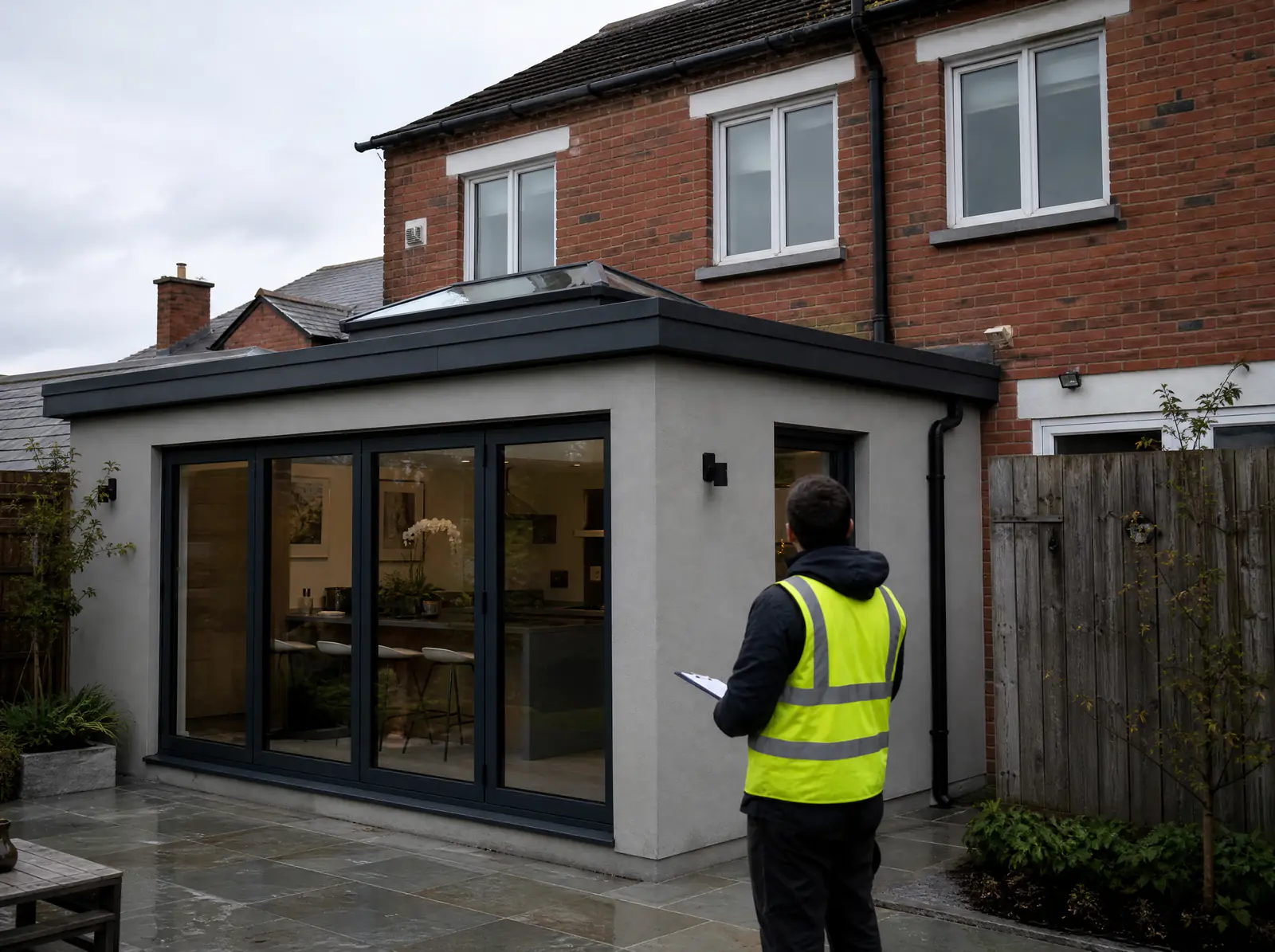
The engineer starts with the paperwork: planning history, any drawings, and the dates of the works. Then comes a visual inspection of the works themselves. The question is whether the structure can be shown to comply, and whether the works were exempted development or had permission.
- Review planning history, drawings and any existing certificates
- Measure the extension against the exempted development limits for its date
- Inspect for cracking, deflection and signs of movement
- Check what can be verified about foundations, steel and roof structure
- Identify anything that needs limited opening-up to verify
- Agree the wording and scope of the opinion with you and your solicitor
What an opinion of compliance can and can't say
An opinion of compliance states that, in the engineer's professional opinion and based on the inspection carried out, the works comply with the planning exemptions or permission and with the Building Regulations. The scope is set out in the document. Many engineers use the wording published by the professional bodies and the Law Society for this purpose.
It is not a guarantee, and it isn't a BCAR Certificate of Compliance on Completion, which is a statutory certificate for works inspected under an inspection plan from the start. Where a steel beam is boxed in and there are no records, the opinion can only cover it if it can be verified. That often means opening a small section of ceiling to see the beam and its bearings.
Selling, remortgaging and getting it done in time
Opinions of compliance usually come up late in a sale, when the buyer's solicitor raises requisitions on title. Start early: ask your solicitor which works need covering as soon as you decide to sell, so any opening-up or remedial work can happen before a closing date is set.
Where works don't comply, for example an extension over the exemption limit, the options include retention planning permission and remedial works, followed by the opinion. The engineer will tell you plainly which applies.
What's included
- Review of planning history and existing paperwork
- Inspection by a Chartered Engineer
- Check against the exemption limits for the works' date
- Structural assessment of the visible works
- Advice on any opening-up needed to verify hidden elements
- Signed opinion of compliance in the standard format
- Direct liaison with your solicitor on wording
- Remedial advice if something doesn't comply
Fixed fee confirmed in writing before the visit.
Opinion of compliance vs BCAR certificate vs nothing
What each one gives a buyer's solicitor.
| Check | No certificate | Opinion after the fact | Inspected during works |
|---|---|---|---|
| Accepted by most buyers' solicitors | No | usually | Yes |
| Hidden steel and foundations verified | No | only if opened up | Yes |
| Planning exemption checked | No | Yes | Yes |
| Delays at closing | likely | possible | unlikely |