Last updated: · Reviewed by Joachim Louw, CEng MIEI
StructuralEngineer.ie carries out pre-purchase structural surveys for buyers across Dublin, Kildare, Meath and Wicklow. Joachim Louw (CEng MIEI) inspects the roof structure, walls, floors, chimneys and any cracking, and checks the alterations a previous owner made, such as removed walls, extensions and attic conversions, against what the paperwork says. You get a written structural report before you sign contracts.
Published Irish guides put a pre-purchase structural survey at €400–€800 for a standard house, with typical Dublin quotes around €445–€500 and higher fees for larger or period homes. Your fee is fixed in writing before the visit.
What happens on the first visit
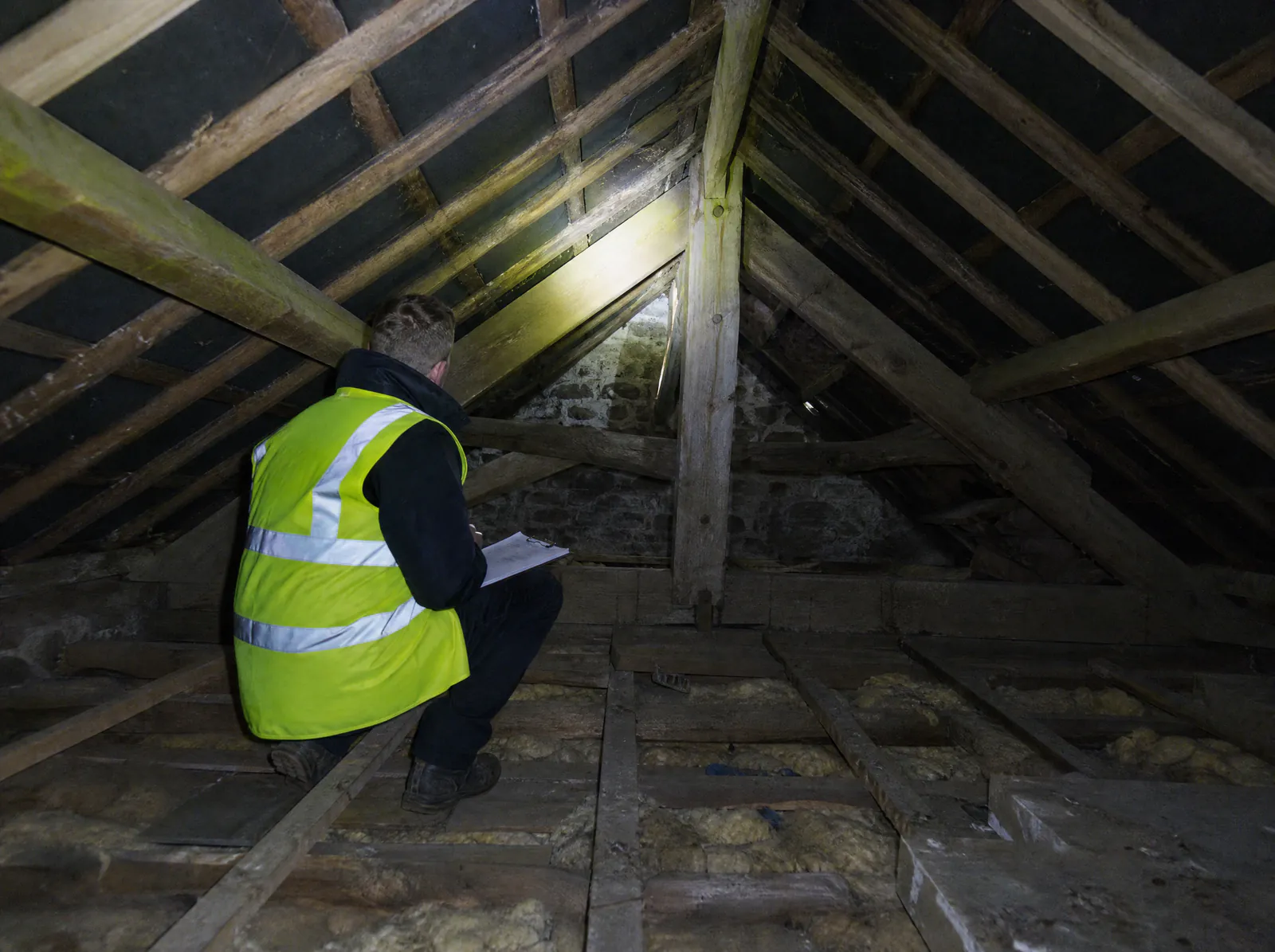
The survey is a visual, non-invasive inspection of everything safely accessible on the day: roof void, rooms, external walls and the site around the house. It is not opening-up. Its limits are stated in writing before you book, and any area that couldn't be seen is recorded in the report, along with what it would take to check it.
- Roof void: rafters, trusses, purlins, any cut or altered members, and signs of leaks
- External walls: cracking, bowing, wall ties, render and brick condition
- Internal walls and floors: removed walls, sagging, slope and cracking
- Chimney stacks and breasts, including any removed below a stack
- Extensions and conversions: junction cracking and evidence of design and sign-off
- Site: trees, drains, retaining walls and ground falls near the house
What a structural survey looks for in Dublin housing
Different eras fail differently. Victorian and Georgian houses have solid brick walls, timber floors built into the walls, and often basements. Bowed façades, rot in joist ends and removed chimney breasts are the usual findings. Mid-20th-century Corporation and private semis tend to have alterations: knock-throughs without steel records, attic conversions on storage joists, and extensions on shallow foundations. Late-1990s and 2000s houses in north Dublin, Meath and Kildare raise the question of pyrite in the floor hardcore.
The report records what was seen, the likely cause of any defect, how serious it is, and what you should do before buying. That might be get a quote, ask the vendor for paperwork, or walk away.
Structural survey or building survey?
A building survey from a chartered building surveyor covers the whole fabric: finishes, windows, damp, services and the structure at a general level. A structural survey from a structural engineer goes deeper on the structure: load paths, cracking, alterations and whether they were engineered. Many buyers get a building survey and add an engineer if the surveyor flags a structural issue. Others go straight to the engineer when there is an obvious structural question, such as a removed wall, an attic room or visible cracking.
Paperwork the vendor should have
For any structural alteration since the house was built, the vendor's solicitor should be able to produce an engineer's or architect's opinion of compliance, and for works over the BCAR thresholds, the statutory certificates. If a wall has been removed and there's no certificate, the survey report notes what can and can't be confirmed, and the buyer's solicitor can require one before closing.
What's included
- Inspection by a Chartered Engineer
- Roof void inspection where safely accessible
- Walls, floors and chimneys checked for movement and alteration
- Crack mapping and damage categorisation
- Review of extensions and conversions against paperwork
- Site check for trees, drains and retaining walls
- Written structural report with photos
- Call to talk through the findings
Typical market range: €400–€800 (pre-purchase structural survey; larger and period houses higher). Source: Banrach cost guide; GetHouseSurvey.ie, 2026. Fixed fee confirmed in writing before the visit.
No survey, a general building survey, or a structural survey
What each one tells you about the structure before contracts are signed.
| Check | No survey | General building survey | Structural engineer's survey |
|---|---|---|---|
| Overall condition of finishes and services | No | Yes | partial |
| Roof structure and load paths assessed | No | general | Yes |
| Removed walls and alterations checked | No | flagged | Yes |
| Cracking categorised and cause assessed | No | flagged | Yes |
| Engineering advice on what to do next | No | referral | Yes |